

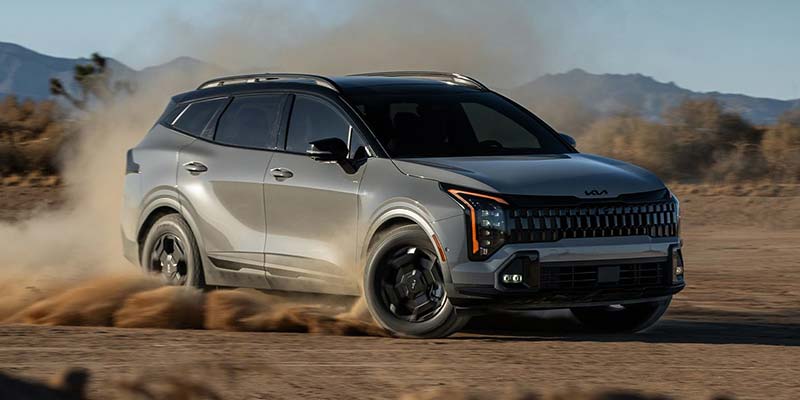
Driving during a Metro East winter means you're going to deal with some nasty weather. From icy overpasses on I-64 to slushy side streets after a February snowstorm, having a capable SUV like a Kia Sportage AWD is only half the equation. The other half is making sure your Sportage is properly prepared before temperatures drop. Here is what you need to know to keep your Sportage AWD running in top shape in Shiloh, IL all season long.
Why the Sportage AWD Is Built for Winter
The Kia Sportage AWD system continuously monitors road conditions and distributes torque between the front and rear wheels as needed. This means when one axle starts to slip on ice or packed snow, the system responds automatically. Paired with available drive mode settings, including a Snow mode that adjusts throttle response and traction control thresholds, the Sportage gives you a mechanical advantage on slick roads. But even the best AWD system performs only as well as the tires and components beneath it.
Check Your Tires Before the First Freeze
Going into winter, you need to pay attention to your tires. When the roads get slick, your tires provide traction for your vehicle, and tires that aren't in top shape can't provide the same level of traction.
The Kia Sportage AWD comes equipped with all-season tires from the factory, which handle light snow and cold pavement reasonably well. However, if you regularly deal with heavy snowfall or prolonged freezing temperatures - common throughout the St. Louis Metro East region - dedicated winter tires offer significantly shorter stopping distances and better grip below 45 degrees Fahrenheit.
Check your tread depth using the quarter test: insert a quarter into the tread groove with Washington's head facing down. If you can see the top of his head, the tires are worn enough to replace. Also confirm that tire pressure is set to the specification listed on your driver's door jamb, since cold air causes pressure to drop roughly one pound per square inch for every 10-degree temperature decrease.
Inspect Fluids and the Battery
Cold weather is hard on batteries. A battery that performs fine in summer can struggle to start your Sportage when temperatures fall into the single digits. Have your battery tested if it is more than three years old, and replace it proactively if it is showing signs of weakness. Most service centers can test battery health in minutes.
Coolant is equally important. Your Sportage's cooling system uses a 50/50 mix of antifreeze and distilled water, which protects the engine down to approximately minus 34 degrees Fahrenheit. If the mix is off or the coolant is old, you risk freezing or corrosion inside the cooling system. Brake fluid and windshield washer fluid rated for sub-zero temperatures should also be checked and topped off before winter arrives.
Wiper Blades and Visibility Essentials
Visibility is a safety issue. Standard wiper blades can freeze to the windshield or streak in icy conditions. Switching to winter-specific wiper blades ensures a clean sweep every time. Keep your washer fluid reservoir full with a formula rated for freezing temperatures, and check that your rear defroster and heated mirrors - available on several Sportage trims - are functioning properly.
Keep an Emergency Kit in the Cargo Area
The Sportage offers a cargo area that makes it easy to store a winter emergency kit. Pack it with a small shovel, an ice scraper with a brush, jumper cables or a portable jump starter, a blanket, and a bag of sand or kitty litter for traction if you get stuck. This is a simple step that many drivers skip, and it can make a difference on a cold night.
Visit Auffenberg Kia Before Winter Hits
Drivers in the St. Louis Metro East area know that when it comes to winter driving, it's better to prepare in advance that try to react to weather conditions as they happen.
A pre-winter inspection at Auffenberg Kia covers tires, battery, brakes, fluids, and more - giving you confidence that your Kia Sportage AWD is ready for whatever the season brings to Shiloh, IL. Schedule your service appointment today and head into winter fully prepared.
 Warranties include 10-year/100,000-mile powertrain and 5-year/60,000-mile basic. All warranties and roadside assistance are limited. See retailer for warranty details.